
Situation
A remote northern transportation corridor must remain serviceable while exposed to changing ground temperatures, frozen-ground variability, drainage constraints, snow redistribution and severe seasonal operating conditions.
Transportation · Permafrost · Climate Adaptation
Northern transportation experience focused on understanding infrastructure performance where permafrost, snow, drainage and coastal climate conditions control reliability.
Project overview
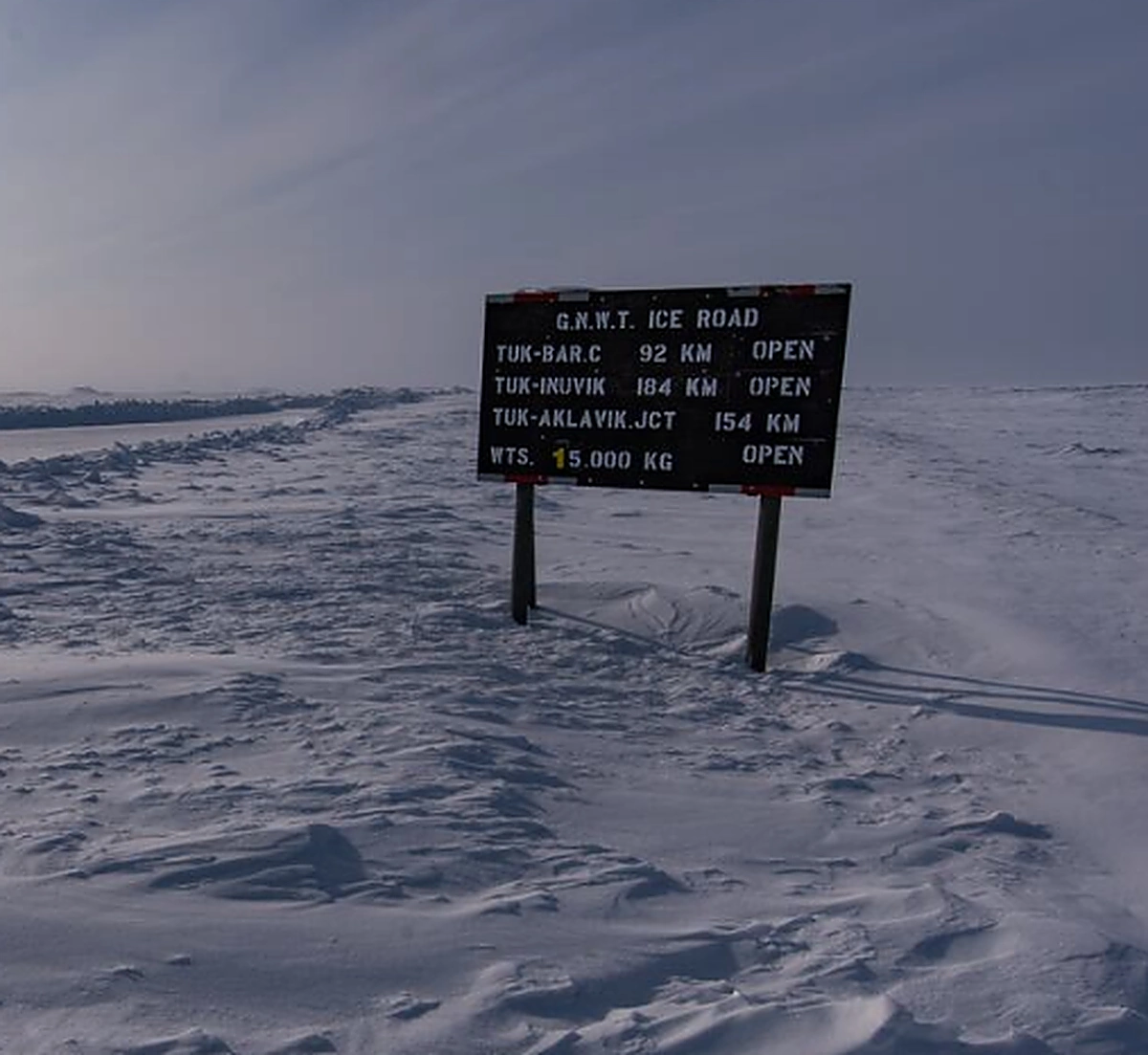
The Inuvik–Tuktoyaktuk corridor is a useful example of the engineering challenge created when a long linear asset crosses terrain that is both thermally sensitive and difficult to access. ShearLine presents this experience as a client-facing example of how monitoring, terrain interpretation and cold-regions engineering can be combined to focus attention on the sections of a corridor most likely to require intervention.
Situation
A remote northern transportation corridor must remain serviceable while exposed to changing ground temperatures, frozen-ground variability, drainage constraints, snow redistribution and severe seasonal operating conditions.
Task
Translate distributed field and infrastructure observations into an understandable picture of where the corridor is most susceptible to thermal or ground-performance change and what information is needed to manage that risk.
Approach
Use a corridor-scale framework that combines cold-regions engineering, terrain and drainage interpretation, monitoring strategy, spatial screening and asset-performance thinking. The emphasis is on identifying transitions — rather than treating the entire corridor as one uniform condition — so field effort and engineering attention can be directed to the highest-value locations.
Result / client value
The value to an owner is a more targeted monitoring and maintenance strategy: fewer broad assumptions, clearer prioritization of field investigations, and a defensible basis for deciding where detailed geotechnical, thermal or hydrologic work is warranted.
Why it matters
Related work
ShearLine can support owners directly or work as a specialist partner within a larger engineering team.